
New Year, New Mindset: Building Healthy Mental Habits That Actually Stick
Dear mothers, grandmothers, aunts, sisters, wives, and any women everywhere:
In a world that constantly asks you to be everything to everyone, your mental health often takes a backseat. Juggling family, work, and relationships makes nurturing your mind feel impossible. Yet, your mental well being is the foundation for everything else.
If you’ve felt the cycle of hope followed by self-criticism, you are not alone. This year, we are shifting the focus from fleeting New Year's resolutions to fundamental, healthy habits. This is not about "fixing" yourself; it’s about small, consistent actions that build emotional resilience and create lasting change.
At Aspen Counseling Services, we’ve created this guide for you women holding communities together. Let’s explore a path to a healthier mind.

The Unique Mental Health Challenges Women Face
Understanding the factors that shape a woman's mental landscape is the first step toward positive change.
Biological and Psychological Factors
Hormonal fluctuations from the menstrual cycle to menopause significantly impact mood and energy. Research shows women are twice as likely as men to experience anxiety and depression. Furthermore, women often engage in "rumination," repeatedly focusing on problems rather than solutions. This can lead to emotional exhaustion if not balanced with self-care.
The Perfection Trap
Societal ideals demand impossible levels of success and selflessness. This conditioning often manifests as perfectionism the belief that your value depends on flawless performance. The "mental load" of household management and caregiving adds a cognitive burden that often goes unrecognized, leading to burnout.
Why Mindset Matters: The Science of Growth
Your mindset is the internal narrative that dictates how you respond to challenges.
Fixed vs. Growth Mindset
Psychologist Carol Dweck identifies two primary mindsets:
Fixed Mindset: Believing your qualities are unchangeable.
Growth Mindset: Believing abilities can be developed through effort.
A growth mindset allows you to see a failed new habit as helpful information rather than personal failure.
The Science of Neuroplasticity
Neuroplasticity is your brain's ability to reorganize itself by forming new connections. Your repeated thoughts create "highways" in your brain. By practicing good habits, you establish healthier pathways that support self-compassion and improved mental wellness.
The Science of Habit: Systems Over Motivation
Motivation is fleeting; systems are permanent. If we rely solely on willpower, we will eventually fail.
Why Resolutions Fail
Most resolutions assume motivation precedes action. In reality, motivation typically follows action; it is the product of small successes. Furthermore, willpower is a finite resource that depletes with stress and lack of sleep.
Building Lasting Habits
Tiny Habits (BJ Fogg): Use the formula: "After I [existing habit], I will [new tiny behavior]." This is habit stacking.
Atomic Habits (James Clear): Focus on identity-based habits. Instead of "I want to exercise," try "I am someone who prioritizes movement."
The Kaizen Principle: Focus on being 1% better each day. This removes the pressure of overnight transformation.
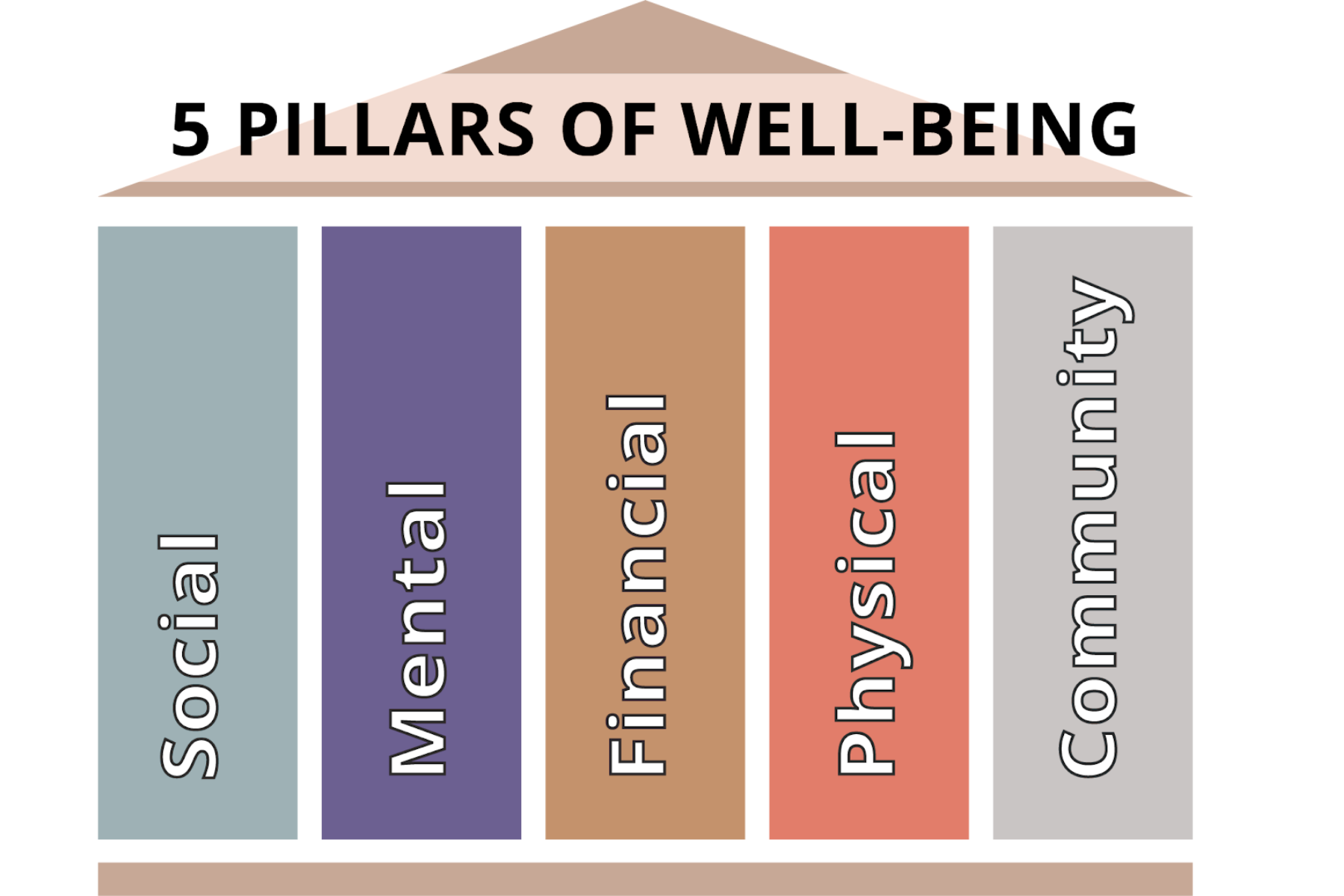
Five Core Pillars of Mental Wellness
Pillar 1: Self-Awareness
Pause several times a day for an Emotional Check-In. Simply naming an emotion (e.g., "I feel overwhelmed") is the first step toward emotional regulation.
Pillar 2: Emotional Regulation
Use the "HALT" Check. When your mood spikes, ask: Am I Hungry, Angry, Lonely, or Tired? Often, an emotional reaction is just a signal of an unmet physical need.
Pillar 3: Boundary Setting
Practice the "No Apologies" rule. Say "no" to one non-essential commitment per week without over-explaining. This protects your energy for overall well being.
Pillar 4: Connection and Community
Human nature thrives on connection. Commit to a Meaningful Reach once a week, a distraction-free coffee or call with a supportive friend.
Pillar 5: Self-Compassion
Treat yourself with the same kindness you’d offer a friend. Research by Dr. Kristin Neff shows self-compassion is more effective than self-esteem in building resilience.
Your Practical Mental Wellness Toolkit
Integrate these positive habits into your daily routine to replace unhealthy habits:
Mindfulness (5 Mins): Use a sensory anchor, like the taste of your coffee, to stay in the present.
4-7-8 Breathing (2 Mins): Inhale for 4, hold for 7, exhale for 8. This instantly calms the nervous system.
The Brain Dump (5 Mins): Write down every worry or to-do item to clear mental clutter.
Cognitive Reframing: When a negative thought arises, ask: "What is the concrete proof this is 100% true?"
Gratitude Practice: List three specific things you are grateful for to shift from scarcity to abundance.
Movement Microdose (10 Mins): A brisk walk releases endorphins and improves overall health.
The "Enough" Practice: Choose one task daily where "good enough" is the goal. This combats the perfectionism that fuels anxiety.
Just choose one of these to start out with! If you try to do all seven, it will be overwhelming and easy to forget. Something > nothing.
Breaking the Cycle of Negative Thoughts
We must dismantle "cognitive distortions" patterns of biased thinking:
All-or-Nothing Thinking: Seeing things in black and white (e.g., "I missed one workout, so I've failed").
Catastrophizing: Magnifying negative events into disasters.
"Should" Statements: Focusing on what you should do, which leads to guilt.
Using Cognitive Behavioral Therapy (CBT) techniques helps you identify these traps and create meaningful shifts in your daily life.
The Link Between Lifestyle and Mental Health
Sleep: Chronic deprivation is a major contributor to irritability. Aim for a "digital sunset" 30 minutes before bed.
Nutrition: Whole foods support stable blood sugar and neurotransmitter production.
Digital Wellness: Social media comparison is a threat to mental well being. Set a protected time each day to stay offline.

When to Seek Professional Support
Building healthy behaviors is powerful, but it isn't a substitute for professional care. Seek a mental health professional (counselor or psychiatrist) if you experience:
Persistent low mood or overwhelming anxiety.
Inability to cope with daily demands.
Thoughts of self-harm. (Call 911 or the 988 Self Harm Hotline)
Conditions like bipolar disorder, trauma, or eating disorders require specialized care. Taking a depression test or bipolar disorder test online can be a starting point, but a clinical evaluation is essential. Seeking help is an act of strength.
Conclusion: Embrace the Journey
Your journey to a healthy mind starts with a single intention. Ditch the guilt of the past year and embrace the power of the micro-habit. Consistency, not intensity, is the key to lasting change.
Choose one micro-habit today and anchor it to an existing habit. Growth is a lifelong practice of care that starts with you, today. At Aspen Counseling Services, we stand ready to support you. You deserve a mind at peace and a life infused with authentic joy.
Frequently Asked Questions (FAQs)
Q: How long does it take to build a habit? A: Research suggests 66 days on average. Consistency and self-compassion are more important than speed.
Q: Why do my resolutions always fail? A: They are often too ambitious. Focus on forming habits through micro-steps and systems, not just high-pressure meaningful goals.
Q: Can I really rewire my brain? A: Yes! Through neuroplasticity, consistent practice of good habits like meditation creates new, healthier neural pathways at any age.
Q: Is it selfish to prioritize my own mental health? A: Absolutely not. You cannot pour from an empty cup. Caring for yourself allows you to show up fully for those you love.
Sources
Lally, P. (2010). Habit formation in the real world.
Fogg, B. J. (2019). Tiny Habits.
Dweck, C. S. (2006). Mindset.
Neff, K. D. (2011). Self-Compassion.
